

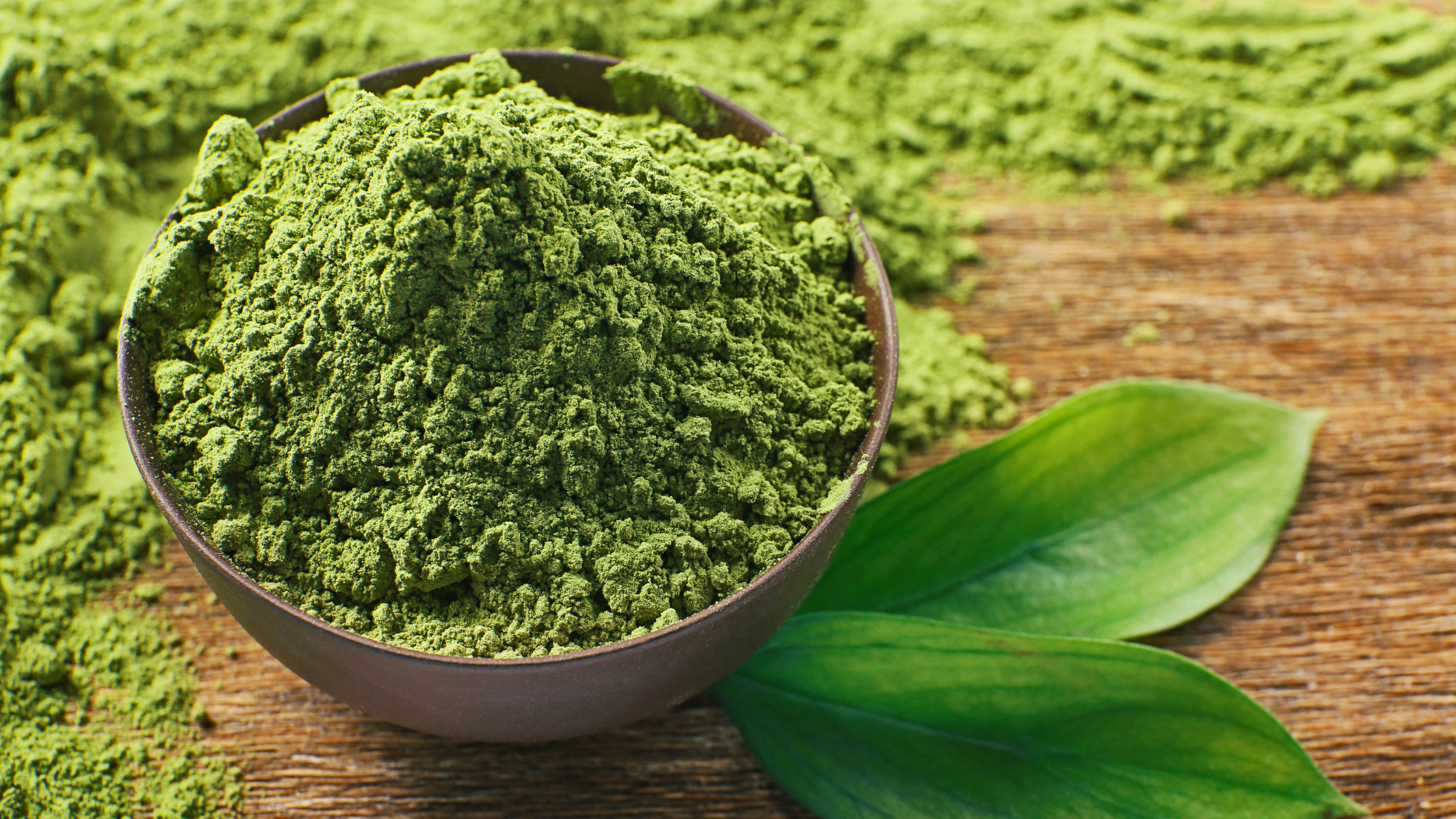
Have you ever wondered what makes a warm cup of green tea feel so calming? A big part of the answer is L-theanine, an amino acid that quietly does the heavy lifting behind tea's soothing reputation* And here's the interesting part: L-theanine's job doesn't stop at "nice cup of tea." It's been studied for a range of effects on how we feel, focus, and unwind.*
So what's the science actually saying? And how do you get L-theanine without committing to twelve cups of tea a day? Let's break it down.
Overview
- What it is: L-theanine is an amino acid found mostly in green tea, where it makes up about half the free amino acids and drives that signature calm-sipping feeling.*
- Where it came from: Discovered in 1949 by Japanese scientists at Kyoto University who were chasing green tea's umami flavor and stumbled onto a calming compound instead.
- How it works: It crosses the blood-brain barrier and gently eases off the brain's "go" signals, nudging neurotransmitters like GABA, serotonin, and dopamine while boosting alpha brain waves.*
- The benefits: Calmer state of mind, sharper focus, better sleep quality, and steadier everyday stress management.*
- The caffeine synergy: Paired with caffeine, L-theanine creates "relaxed alertness," improving attention and accuracy more than either does alone.*
Defining L-theanine
L-theanine is an amino acid found in a handful of plants and fungi, but its claim to fame is green tea, where it's responsible for the calming effects that come with sipping it.* In fact, it accounts for about half of the free amino acids in green tea, which is why it shapes the flavor so much.
Origins of L-theanine
L-theanine was first discovered in 1949 by Japanese scientists at Kyoto University, who were trying to figure out what gave green tea its distinctive umami flavor. They weren't hunting for a calming compound; they stumbled into one. A year later, it was isolated from gyokuro tea leaves, and the rest is history.
Since then, L-theanine has been studied for its calming effects and its ability to support a more relaxed, settled state of mind.* One of the most consistent findings: L-theanine appears to increase alpha brain wave activity — the kind linked to a state of "relaxed wakefulness," like the calm you feel during meditation.* In other words, it helps the mind relax without making you drowsy.* Research also suggests it supports the brain's calming chemistry, with studies pointing to effects on neurotransmitters like GABA, serotonin, and dopamine.*
Chemical Structure and Properties of L-theanine
Structurally, it's a close cousin of glutamate — the two share a similar molecular shape, since L-theanine is essentially a glutamic acid derivative. And in biology, shape is everything. Because L-theanine resembles glutamate so closely, it can bind to the same glutamate receptors in the brain, slipping into the same locks and nudging the same pathways.
Glutamate is the brain's main excitatory neurotransmitter; the major "go" signal driving fast excitatory transmission, alertness, and the machinery behind learning and memory.* L-theanine, by contrast, plays the opposite role. It binds to those same receptors — the AMPA, kainate, and NMDA glutamate receptors — but with far weaker affinity, somewhere between 80 and 30,000 times less than glutamate itself.
So instead of flooring the accelerator, it eases off it. L-theanine acts as an antagonist at the AMPA and kainate sites, dialing down excess excitatory activity rather than firing it up. Think of it as turning the volume down a notch; not muting the signal, just taking the edge off. That gentle braking effect is one of the leading explanations for why L-theanine feels calming.*
How L-theanine Works in the Body
L-theanine's main stage is the central nervous system. It's well absorbed in the gut and can cross the blood-brain barrier, which means it reaches the brain directly rather than working at arm's length. Once there, animal neurochemistry studies suggest it influences key brain chemicals, increasing levels of serotonin, dopamine, and GABA.* These are the molecules that control mood, sleep, emotion, and how we handle stress.
The upshot is that L-theanine is studied for its ability to support relaxation without drowsiness,* support mental clarity,* and help moderate the body's physiological response to stress.* It's the rare compound that helps you settle without slowing you down.*
Benefits of L-theanine
L-theanine has built its reputation on a handful of well-studied effects:
- Supporting a calmer state of mind* — helping the body stay composed under pressure.
- Supporting cognitive function* — particularly attention and focus, especially when paired with caffeine.
- Supporting sleep quality* — by easing mental tension rather than sedating you.
- Supporting overall wellness* — as part of a balanced approach to managing everyday stress.
The common thread is that it tends to help you feel settled and clear-headed at the same time; calm without the fog.*
Scientific Studies Supporting L-theanine Use
The research here is interesting. On stress and mood: a 2016 randomized, double-blind, placebo-controlled trial published in Nutrients gave 34 healthy adults an L-theanine-based drink before a demanding multitasking challenge. The result was that their subjective stress response was significantly reduced one hour after taking it compared to placebo, and their cortisol response, a hormonal marker of stress, was lower three hours in.* That's L-theanine helping the body keep its cool under pressure.*
On attention: a 2012 study in Neuropharmacology by Foxe and colleagues looked at how L-theanine and caffeine affect the ability to stay locked in during a sustained attention task. They found that both compounds influence rapid, moment-to-moment deployments of attention, reflected in both task performance and alpha-band brain activity.* Worth noting: the standout effects in this study came from the L-theanine-and-caffeine combination, which, conveniently, is exactly how green tea delivers it, and how Neuro Energy & Focus is formulated.*
On sleep: a 2019 trial in Nutrients found that four weeks of L-theanine helped reduce sleep-quality problems like trouble falling asleep and sleep disturbance, while also nudging verbal fluency upward in people who'd scored lower to start.* Notably, it appears to support better sleep not by sedating you, but by easing the mental tension that keeps you up.*
Side Effects and Considerations of L-theanine Use
In terms of side effects, L-theanine has an excellent safety track record. The FDA granted it GRAS ("Generally Recognized as Safe") status in 2007. In human trials, side effects are uncommon and mild, with headache, dizziness, and gastrointestinal symptoms being the few occasionally reported. A 2024 randomized, double-blind, placebo-controlled trial in Neurology and Therapy gave healthy adults 400 mg/day for 28 days and found it safe and well-tolerated, with no clinically meaningful safety concerns.
That said, a few sensible caveats. L-theanine can gently lower blood pressure, so if you take antihypertensive medication, sedatives, or stimulants, it's worth a conversation with your healthcare provider first. The same goes for anyone pregnant, breastfeeding, or managing a specific health condition. Human safety data in pregnancy is lacking, so clearance from a professional is the right call.
L-theanine rarely travels alone. Its effects can shift depending on what it's paired with, caffeine being the obvious example. So the experience of L-theanine with caffeine can feel quite different from L-theanine on its own.
L-theanine in Everyday Life
Tea isn’t the only way to get your dose of L-theanine. These days, it shows up in Neuro Gum & Mints dietary supplements. With Neuro, you get the perks of L-theanine in a form that fits in your pocket and works in seconds, no kettle required.*

L-theanine Across the Neuro Lineup
L-theanine is a cornerstone ingredient in most of Neuro's formulas, but the amount and the supporting cast change depending on what each product is designed to do. Here's how it breaks down by product:
- Energy & Focus (gum & mints) — 60mg L-theanine + 40mg natural caffeine, plus vitamins B6 and B12. The everyday "relaxed alertness" duo is perfect for desk work and daily focus.*
- Extra Strength Energy & Focus (gum) — 60mg L-theanine + 100mg natural caffeine, plus B6 and B12. Same calming amino acid, a bigger caffeine push for workouts and peak-demand moments.*
- Memory & Focus (gum) — 60mg L-theanine paired with Cereboost® American Ginseng and B vitamins, and notably caffeine-free. Built for recall and mental clarity without the stimulant.*
- Calm & Clarity (mints) — L-theanine alongside 65mg of GABA and vitamin D3, formulated for composure and clear-headedness without drowsiness.*
As always, the smart move is to follow the serving size on the packaging. Research generally considers L-theanine safe and effective in daily doses of around 100–400mg, so a piece or two sits comfortably within that well-studied range for most people.
L-theanine in Neuro Functional Gum & Mints
L-theanine is one of the star ingredients across Neuro's lineup, helping support focus, clarity, and relaxation in a portable format.* But it does its most interesting work alongside caffeine. In Neuro's Energy & Focus products, the two are paired to maximize their synergistic effect. Research suggests L-theanine can take the edge off caffeine's vasoconstrictive side effects, reducing stress hormones without causing sedation.*
Advantages of Neuro Gum & Mints with L-theanine
Neuro smart gum & mints are a low-effort way to get L-theanine into your daily routine.* They're convenient, portable, and designed for the moments you actually need them — a long meeting, a workout, the 3pm slump — to support focus, manage everyday stress, and stay steady.*
The L-theanine-and-caffeine pairing is where the science gets fun. On its own, caffeine sharpens alertness while L-theanine encourages calm. When you put them together, they produce a state often called "relaxed alertness."* It's not just marketing language, either: a study combining 50mg caffeine with 100mg L-theanine improved both speed and accuracy on an attention-switching task and made people less susceptible to distraction.* Other research has found the combination improves attention, accuracy, and alertness more than either compound on its own.*
The science behind L-theanine reveals a fascinating compound, with a growing body of research pointing to benefits for focus, calm, and cognitive performance.* With the ease of Neuro Gum & Mints, it can earn a real place in your daily routine, helping you move through your world with a little more clarity.*
Frequently Asked Questions
What is L-theanine best used for?
Calm focus, plain and simple. L-theanine helps you feel settled and clear-headed at the same time.* It's most studied for supporting a calm state of mind, easing the body's response to stress, and supporting attention and sleep quality.* Its standout move, though, is teamwork: when paired with caffeine, the combination has been shown to improve attention, accuracy, and alertness more than either one alone.* It's the reason we formulate our products with L-theanine.
What shouldn't I mix with L-theanine?
Good news first: L-theanine plays nicely with most things, and pairs comfortably at standard doses with everyday nutrients like B-vitamins, vitamin D, and omega-3s. A few medication types are worth a quick check-in, though. Because L-theanine gently supports calm and can nudge blood pressure downward, it's smart to consult your doctor if you take blood pressure medication, sedatives or sleep aids, or stimulants like those used for ADHD. A healthcare expert can advise on what's right for you.*
Does L-theanine make you feel sleepy?
Nope, and that's one of its best tricks. L-theanine is studied for promoting relaxation without the sedation or drowsiness you'd expect.* It appears to work by boosting alpha brain waves — the "relaxed wakefulness" state, like the calm you feel during meditation — so you feel calmer and clearer, not knocked out.* Think "settled," not "sleepy."
Does L-theanine give you energy?
Not in the way caffeine does, as L-theanine isn't a stimulant. What it does is shape how your energy feels. On its own, it's calming, but paired with caffeine, research shows the combination supports focus and alertness while L-theanine helps take the edge off caffeine's jittery side.* So instead of winding you up, it helps your caffeine land smoother.* That's exactly the thinking behind Neuro Energy & Focus and Extra Strength Energy & Focus, which pair the two in every piece.
What's the best time of day to take L-theanine?
Whenever your day needs it. On its own, L-theanine supports a calm, focused state without drowsiness, so it fits just as well into a busy afternoon as a wind-down evening.* The timing question really comes down to what else is in the mix.
Since Energy & Focus and Extra Strength Energy & Focus pair L-theanine with natural caffeine, they're best enjoyed in the morning or early afternoon — close enough to your day's demands, far enough from bedtime to keep your sleep undisturbed.* Memory & Focus gum (caffeine-free) and Calm & Clarity mints (caffeine-free), on the other hand, skip the caffeine entirely, so you can reach for them whenever the moment calls.*
Is L-theanine safe to take every day?
For most healthy adults, yes, it has an excellent safety record. The FDA grants it GRAS ("Generally Recognized as Safe") status, and a 2024 randomized, placebo-controlled trial found 400 mg/day for 28 days was safe and well-tolerated. If you take medications or have a specific health condition, a quick check with your healthcare provider is always a smart first step, but for everyday use, L-theanine is about as friendly as functional ingredients get.
*These statements have not been evaluated by the Food and Drug Administration. Neuro products are not intended to diagnose, treat, cure, or prevent any disease.


