

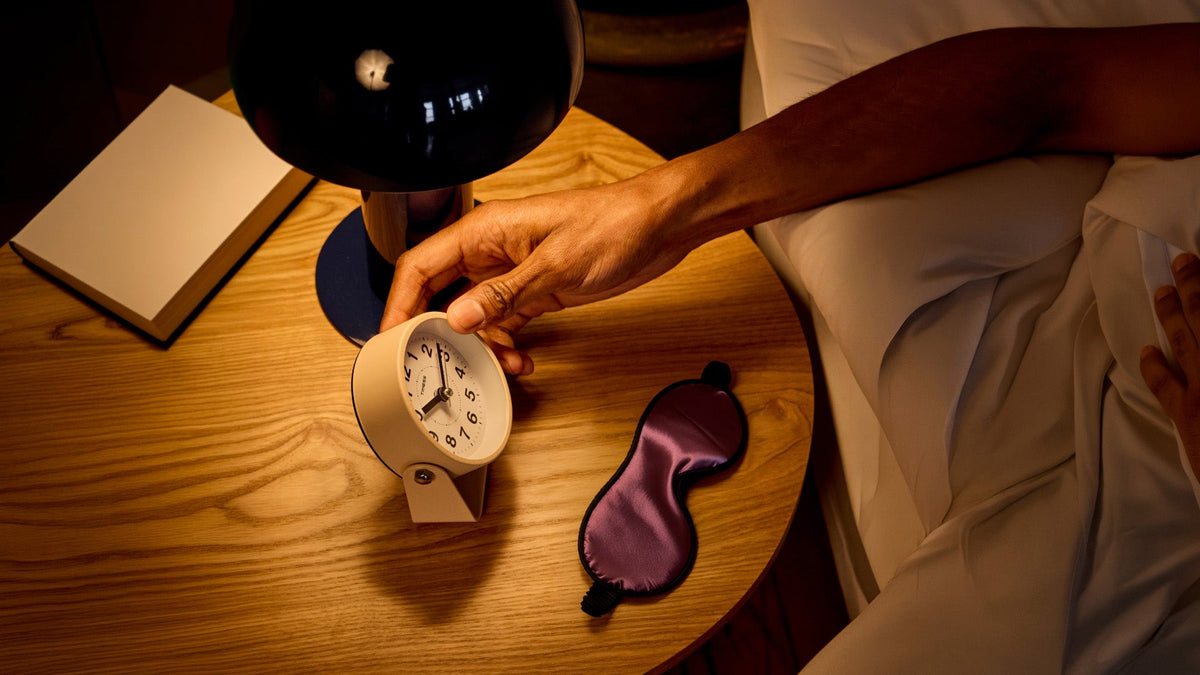
Once a year, the calendar hands you a free hour. Then you spend it scrolling, waking up before your alarm anyway, and wondering why 5 p.m. suddenly looks like midnight. Welcome to fall back! The end of daylight saving time, and the one clock change most people actually look forward to.
Here’s your guide to the fall daylight saving time switch in 2026: when it happens, what really happens to that “extra” hour of sleep, why your body might not get the memo right away, and how to glide through the time change with your energy intact.
Overview
- Daylight saving time ends Sunday, November 1, 2026, at 2 a.m. local time, when clocks fall back to 1 a.m.
- Hawaii, most of Arizona and the U.S. territories don’t change their clocks. The Navajo Nation does.
- You gain an hour on the clock, but studies suggest you rarely get the full 60 minutes of extra sleep.
- The fall change can bring a short rough patch of poor sleep that usually fades within two weeks.
- Earlier sunsets matter: light is the main signal for your internal clock, and darker evenings raise the risk for pedestrians and cyclists.
- The easy fixes: shift your schedule gradually, use the extra hour to sleep, chase daylight and move your caffeine earlier.
- Clocks spring forward again on March 14, 2027. A bill to make daylight saving time permanent passed the House in July 2026 but hasn’t passed the Senate.
When does daylight saving time end in 2026?
Daylight saving time ends on Sunday, November 1, 2026, at 2:00 a.m. local time. At that moment, clocks roll back to 1:00 a.m., so you get to live through the 1 o’clock hour twice. Use it wisely
The date isn’t random. Under federal law, daylight saving time in the USA starts on the second Sunday in March and ends on the first Sunday in November, both at 2 a.m., and those dates are written into statute. In 2026, that means fall back 2026 lands on November 1, and the clocks spring forward again on Sunday, March 14, 2027.
Who doesn’t fall back?
Not everyone plays along. Hawaii, most of Arizona, American Samoa, Guam, the Northern Mariana Islands, Puerto Rico and the U.S. Virgin Islands skip daylight saving time entirely, so their clocks stay put. The twist: the Navajo Nation, which stretches across part of northeastern Arizona, does observe it. States are allowed to opt out of daylight saving time, but if they observe it, they have to switch on the federal dates.
Quick checklist for the big night
- Phones, laptops and smartwatches update on their own, as long as your software is current.
- Oven, microwave and car clocks need a human.
- Plans for Sunday, November 1 might shift: double-check alarms, flight times and anything booked for the early morning.
Fall daylight saving time: do you lose or gain an hour?
On paper, you gain one. When daylight saving time ends, the clock rewinds from 2:00 to 1:00 a.m., which makes Saturday night 25 hours long. That’s where the classic memory trick comes from: spring forward (you lose an hour in March) and fall back (you gain an hour in November).
In real life, that hour gain works more like a coupon than a cash prize. A few things researchers have found:
- You probably won’t bank the full 60 minutes. In a UK study that tracked 11,780 adults with wrist-worn activity monitors, people slept about 33 minutes more on the Sunday of the autumn clock change than on the Sunday before. A nice boost, but not the full hour.
- The rest of the week can eat into the bonus. A review of daylight saving time research found little evidence of a whole extra hour of sleep on the night of the fall change, and noted that people tend to wake up earlier for about five days afterward, which may add up to a small net sleep loss across the week.
- Sleep quality can dip, too. In a small study of healthy adults, sleep efficiency dropped after the fall transition, and their daily rest-activity patterns still hadn’t fully adjusted four days later.
Why your body doesn’t get the memo
Your body runs on its own internal timekeeper: the circadian rhythm, a roughly 24-hour cycle coordinated by your brain. Light and darkness have the biggest influence on that clock, and in the evening it signals the brain to make more melatonin, the hormone that makes you sleepy.
Here’s the catch: your master clock doesn’t check the microwave display. After fall back, 9 p.m. on the new clock feels like 10 p.m. to your body, and 6 a.m. feels like 7 a.m. So you get sleepy “early,” wake up “early,” and spend the first few days feeling like you took a tiny westbound flight without the vacation. (Parents of little ones: yes, this is why your toddler thinks 5 a.m. is the perfect time for breakfast.)
Why do we even have daylight saving time?
Short answer: to make better use of daylight and, historically, to save fuel. The longer answer involves a founding father’s joke, a New Zealand bug enthusiast, and two world wars.
Benjamin Franklin didn’t invent it (sorry, internet). In 1784, Franklin wrote a satirical letter to the Journal de Paris teasing Parisians for sleeping through the morning and burning candles at night. It’s a fun read, and it’s the reason people still credit him with daylight saving time, but the editors of Franklin’s papers note that this conclusion is false.
One of the first serious proposals came from an entomologist. On October 16, 1895, George Vernon Hudson, a New Zealand postal clerk and insect expert whose shift work made him value daylight hours, presented a paper to the Wellington Philosophical Society proposing seasonal clock adjustments. Several members laughed it off. History, as it turns out, had the last laugh.
Then came the wars. Germany started observing daylight saving time in 1916 to conserve fuel, and much of Europe followed. The U.S. adopted it in 1918 through the Standard Time Act, which also made time zones official by law. Congress dropped it after World War I, brought back a year-round version called “War Time” in 1942, and ended that in 1945.
Order finally arrived in 1966. The Uniform Time Act set nationwide start and end dates. Later tweaks moved the schedule around, and the Energy Policy Act of 2005 gave us today’s version: the second Sunday in March to the first Sunday in November.
And the energy savings? When the Department of Energy studied the 2007 extension, it estimated the savings at about 0.02% of total U.S. energy use. Not exactly a lightning bolt.
Insomnia after daylight saving time ends? You’re not imagining it
Here’s the plot twist nobody puts on the calendar: the “easy” clock change might be the one that messes with your sleep more.
In a study of 30,097 adults ages 45 to 85, people surveyed one week after the switch to standard time were more likely to report being unhappy with their sleep (28% versus 23% the week before). They also reported more trouble falling asleep, more trouble staying asleep, and more daytime sleepiness. The spring change didn’t show the same pattern in that group.
The good news is that the researchers found those sleep disruptions were short-lived and no longer showed up two weeks after the change. One caveat worth knowing: the study only included middle-aged and older adults, so results may look different for younger people.
So if you’re lying awake at 3 a.m. the week after fall back, wondering why your “extra hour” feels like a prank, you’re not alone. A few restless nights while your internal clock catches up is common. If trouble sleeping sticks around for weeks, that’s worth bringing up with a healthcare professional.
Hello, 5 p.m. sunset
The other big change is light. Once the clocks fall back, sunset arrives about an hour earlier on the clock, and since light is the strongest signal your internal clock uses to stay on schedule, suddenly darker evenings can leave you feeling off for a bit.
Darker evenings also change things on the road. A study of U.S. fatal crashes from 2010 to 2019 found that in the five weeks after the fall time change, fatal crashes involving pedestrians and cyclists rose 13%, while those involving people inside vehicles fell about 7%, with light conditions playing a big role. So if you walk, run or bike after work, it’s reflective-gear season.
How to fall back without falling apart: 7 tips
You can’t stop the clocks (yet), but you can make the ending of daylight saving time a lot smoother. Pick the tips that fit your life.
1. Ease into it, if your schedule allows.
Sleep physicians at the American Academy of Sleep Medicine (AASM) suggest going to bed and waking up 10 to 15 minutes later each day during the week before the change, so the new clock time feels less like a jolt. They compare the shift to flying from New York to Chicago, which is a much nicer way to think about it than “losing your mind at 5 a.m.”
2. Or cash in the hour (seriously).
Running on fumes? The AASM points out that the fall time change is a great chance for sleep-deprived adults to adopt an earlier bedtime: go to bed at your usual time on Saturday, set the clocks back right before you get into bed, and wake up at your normal time. Congratulations, you just turned a clock change into a recovery night!
3. Don’t spend the hour staying up late.
Tempting, we know. One more episode, one more scroll. But sleep doctors call staying up later on the assumption that you’ll get an extra hour of sleep one of the biggest fall back mistakes. The extra hour only counts if you actually sleep.
4. Chase the daylight.
Light and darkness have the biggest influence on your internal clock. With sunsets arriving before dinner, make daylight a daily appointment: a walk after lunch, your coffee break by a window, the school pickup on foot.

5. Move your caffeine earlier.
When it’s pitch black at 5:30 p.m., your brain may start asking for a pick-me-up at a very inconvenient hour. Timing matters here: in a study of healthy sleepers, 400mg of caffeine taken even six hours before bed cut total sleep time by more than an hour, and participants didn’t always notice the disruption themselves.
That’s where a smaller, more precise dose earns its spot. Each piece of Neuro Energy & Focus gum or mints gives you 40mg of natural caffeine with 60mg of L-theanine, an amino acid found in tea. That pairing is what gives Energy & Focus its smoother, more balanced feel compared to a big mug of coffee. In a placebo-controlled study, caffeine combined with L-theanine improved both speed and accuracy on a demanding attention-switching task and helped people tune out distractions.*
Chew one in the morning or early afternoon, and let it do its thing before the evening wind-down. Prefer a fruity kick? The Sour Mints in Sour Apple, Sour Citrus and Sour Berry bring the same energy with extra attitude.
Past your caffeine cutoff but still need to power through a late task? Memory & Focus is a great caffeine-free alternative.*
6. Nap smart, sip smart.
If the midday slump hits hard that first week, a brief 15 to 20 minute nap can help. Sleep physicians also flag alcohol close to bedtime and caffeine in the afternoon or later as common pitfalls during the adjustment period. Translation: power nap, yes, Sunday-afternoon three-hour coma, no.
7. Build a wind-down you actually look forward to.
In the evening, your brain’s master clock ramps up melatonin, the hormone that makes you sleepy. Give it a calm runway: dimmer lights, phone across the room, a book you’ve been meaning to finish. On nights your mind refuses to clock out, Neuro Sleep & Recharge Meltaway Mints combine melatonin with chamomile, lemon balm and passion flower to help you relax into rest.*
FAQ: Fall daylight saving time
When does daylight saving time end in 2026?
Sunday, November 1, 2026, at 2:00 a.m. local time. Clocks go back to 1:00 a.m.
Do you lose an hour of sleep in daylight saving time?
In the spring, yes: clocks jump forward and you lose an hour. In the fall, you technically gain one. In practice, one large study found people slept about 33 extra minutes on the Sunday of the fall change, not a full hour.
Fall daylight savings: lose or gain an hour?
Gain. Remember “spring forward, fall back.” On November 1, you set the clock back one hour.
Can the end of daylight saving time cause insomnia?
It can bring a short rough patch. In a study of more than 30,000 adults, people surveyed the week after the fall change reported more trouble falling and staying asleep, but those effects faded within two weeks. If sleep problems last longer than that, talk to a healthcare professional.
Do I need to change my phone’s clock?
Usually not. Phones and computers switch automatically when their software is up to date. Ovens, microwaves, car dashboards and analog clocks still need a manual reset.
Which states don’t observe daylight saving time?
Hawaii and most of Arizona, plus American Samoa, Guam, the Northern Mariana Islands, Puerto Rico and the U.S. Virgin Islands.
When does daylight saving time start again?
Sunday, March 14, 2027, when the clocks spring forward one hour.
Is daylight saving time becoming permanent?
Not yet. The House passed the Sunshine Protection Act in July 2026, but the Senate hasn’t acted on it, so the twice-a-year time change continues for now.
The bottom line
Fall back 2026 happens on Sunday, November 1. You get an extra hour on the clock, your body takes a few days (sometimes a couple of weeks) to catch up, and the sun starts clocking out before you do. None of that has to wreck your week. Shift your schedule gently, protect your sleep, chase the daylight, and time your energy boosts like the pro you are.
Fall back with good energy
Darker afternoons call for a smarter boost. Keep Neuro Energy & Focus in your bag for the 2 p.m. dip, reach for Extra Strength Energy & Focus when the day demands more energy (100mg of natural caffeine per piece), switch to caffeine-free Memory & Focus once your cutoff hits, and close the night with Sleep & Recharge Meltaway Mints.* Good energy by day, good rest by night.
*These statements have not been evaluated by the Food and Drug Administration. Neuro products are not intended to diagnose, treat, cure, or prevent any disease. This article is for educational purposes only and does not substitute for professional medical advice. Always consult a healthcare professional before starting any new supplement regimen.


